
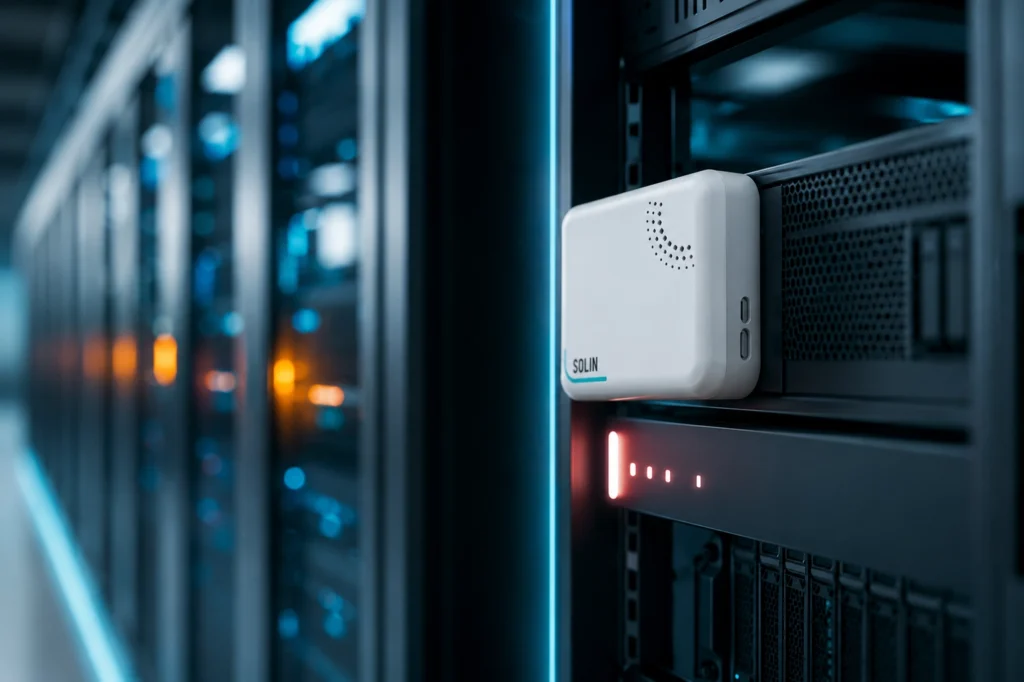





In air-cooled data centers, cooling often reacts too late to real thermal demand. The result is broad overcooling, 30-40% wasted plant energy, and limited proof of what cooling actually saved.
Most cooling systems still rely on room-level temperature, flat 24/7 fan schedules, and no rack-level signal. They react only after heat has already built up, with no way to anticipate what is coming next. That makes savings hard to prove and exact kWh reduction hard to defend.
Operators cool broadly because they cannot see thermal demand early enough. The result is chronic overcooling, 30-40% wasted plant energy, and zone-level performance that is never optimized. When hotspots develop, broad cooling does not prevent them – it only masks them.
CSRD, EU EED, and 24/7 CFE commitments have changed what operators need to prove. Scope 2 emissions, PUE, WUE, and energy performance can no longer rely on estimates alone. For many operators and tenants, verification is no longer optional – it is now a reporting requirement.
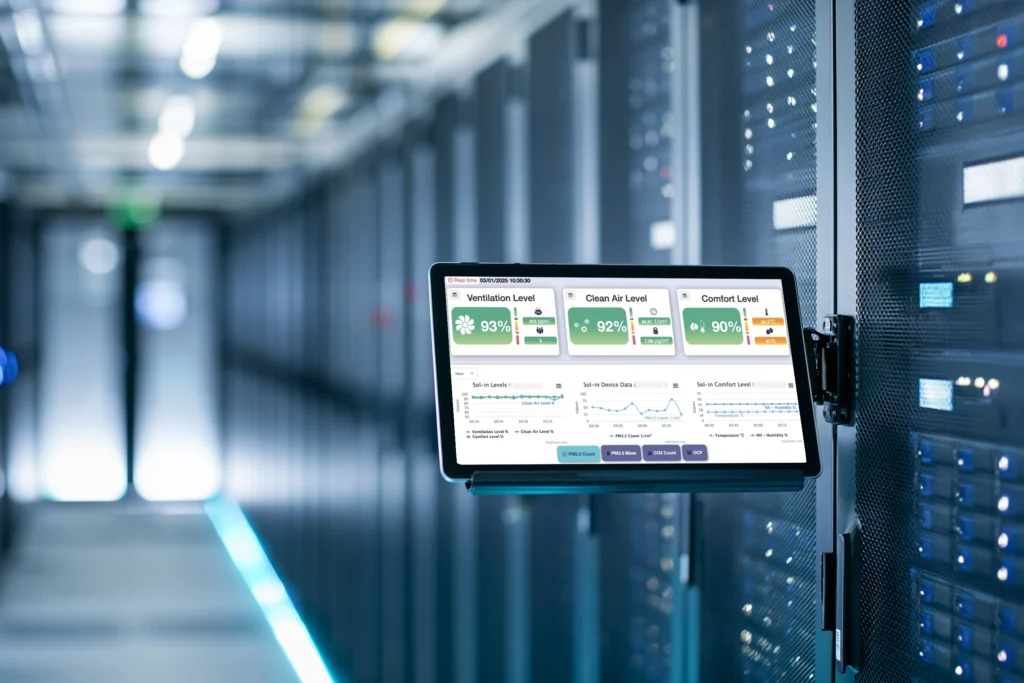
Sol DCAI reads rack and PDU power as the earliest reliable signal of future heat – not temperature, which can arrive 60–300 seconds later. By seeing demand sooner, the system can respond sooner. Its closed loop continuously pulls data, learns thermal patterns, orchestrates bounded CRAH adjustments, and verifies the result against a dynamic baseline. The system rechecks every few minutes, keeps uptime first, and avoids unstable control, overreaction, or black-box behavior.
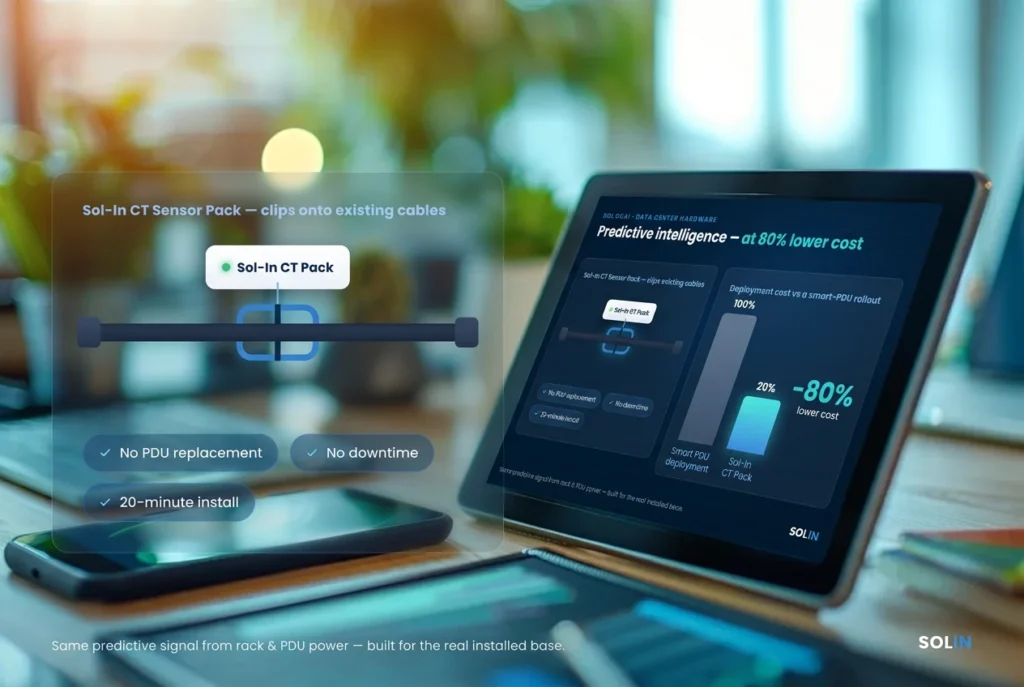
Most data center overlays assume an idealized installed base. Sol DCAI is built for the real one. The Sol-In CT Sensor Pack clips onto existing cables, with no PDU replacement, no downtime, and a 20-minute install. It delivers the same predictive intelligence as a smart PDU-based deployment – at 80% lower cost.
Sol DCAI’s Virtual Energy Meter turns cooling performance into verifiable, timestamped energy data and carbon outputs. Running at 10-second resolution, it measures the impact of every cooling adjustment against a dynamic baseline. That gives operators more than estimates or calculated PUE figures – it provides verified energy data and structured carbon outputs that can support CSRD reporting. Combined with carbon-aware scheduling, the platform also helps shift cooling to lower-carbon grid hours in line with 24/7 CFE commitments.
Reduce waste, improve efficiency, and gain verified performance data – without replacing existing systems.