

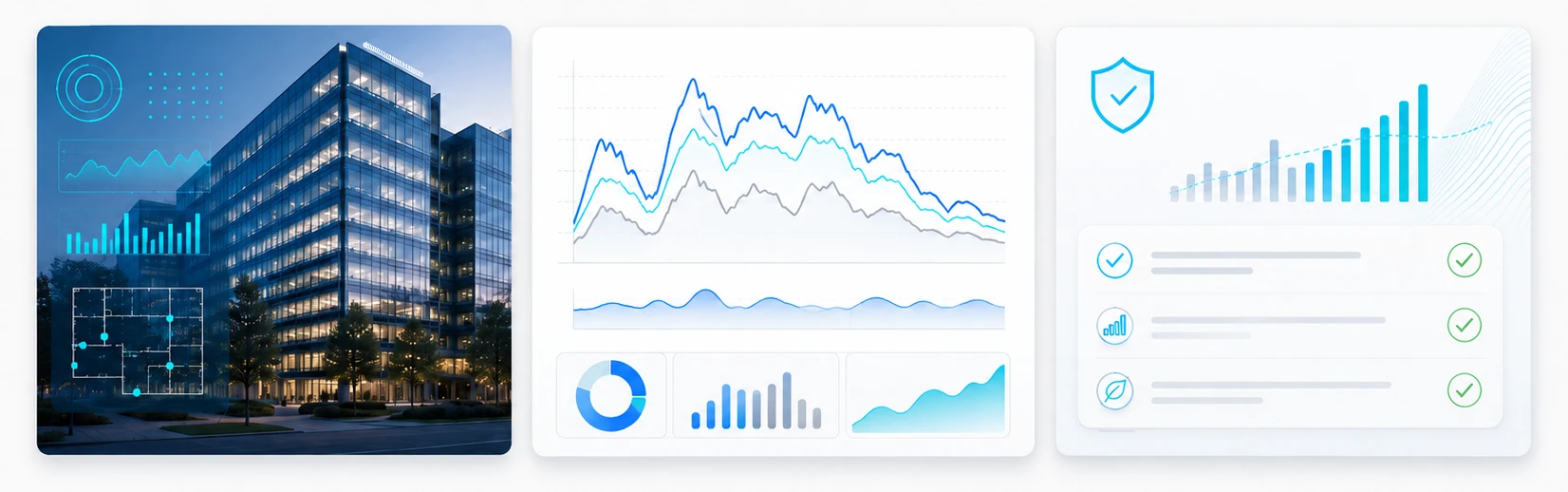
ECO·IN learns your building from its own continuous data layer, controls HVAC by real demand, and verifies performance against a clear baseline. It operates as an independent intelligence layer between real building data and HVAC performance, capturing and processing what is happening across rooms, zones, floors, and equipment without relying on a BMS. Over time, the Software layer builds operational signatures, while Sol AI – the platform’s decision engine – turns demand into bounded HVAC decisions and VEM verifies the result. This is not a dashboard, not a hardware stack, and not generic AI. It is a closed-loop platform built to measure, understand, control, and verify.
ECO·IN Building Intelligence Platform connects real building demand to HVAC performance through one closed operational loop. Each layer has a distinct role: hardware captures the signals, software builds understanding, Sol AI turns that understanding into action where appropriate, and VEM verifies the result in energy, cost, and carbon terms. Together, the four layers move buildings beyond schedules, beyond dashboards, and into measurable performance.
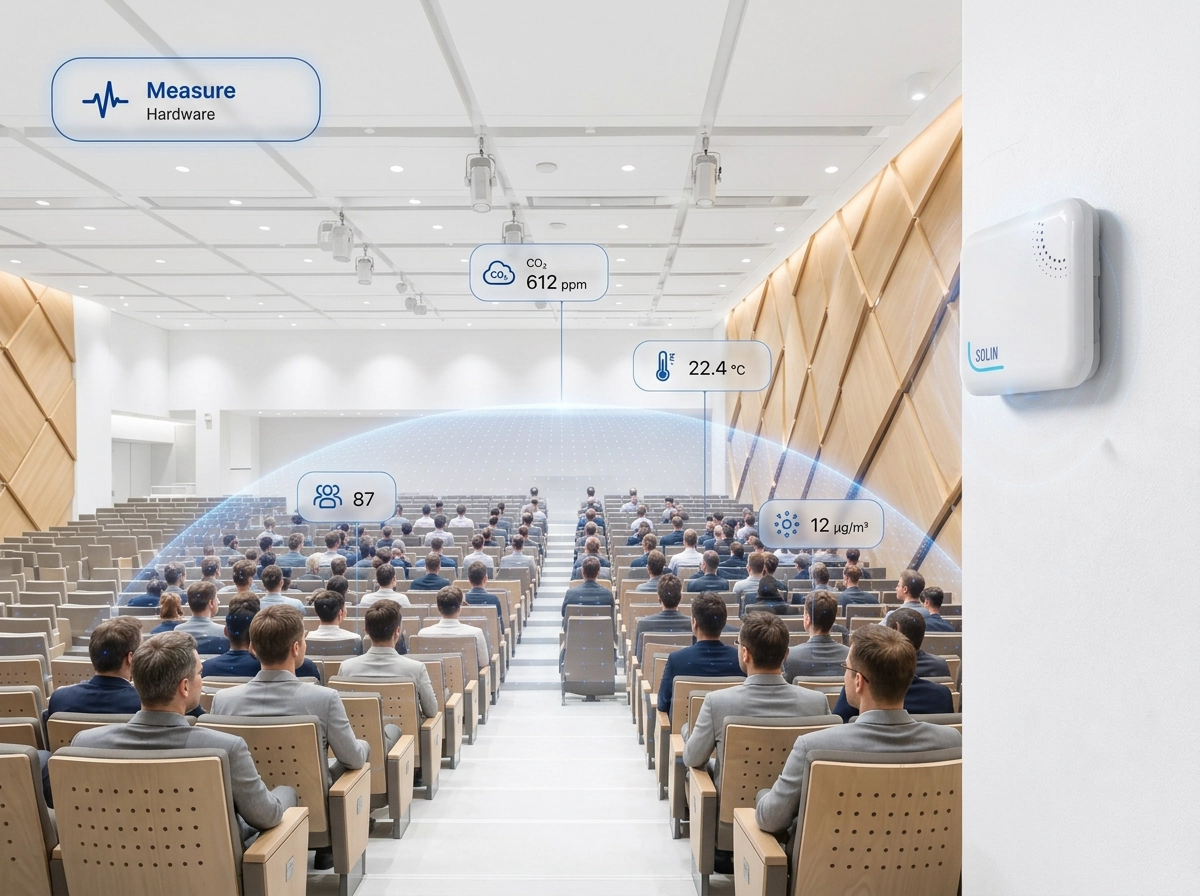
Captures real room conditions, equipment behavior, and HVAC signals from across the building – with sensors placed in the breathing zone of occupied spaces, not at the entrance thermostat and not in return air where only averages are measured.
Provides the real building data the platform needs to uncover waste that schedules and static rules miss.
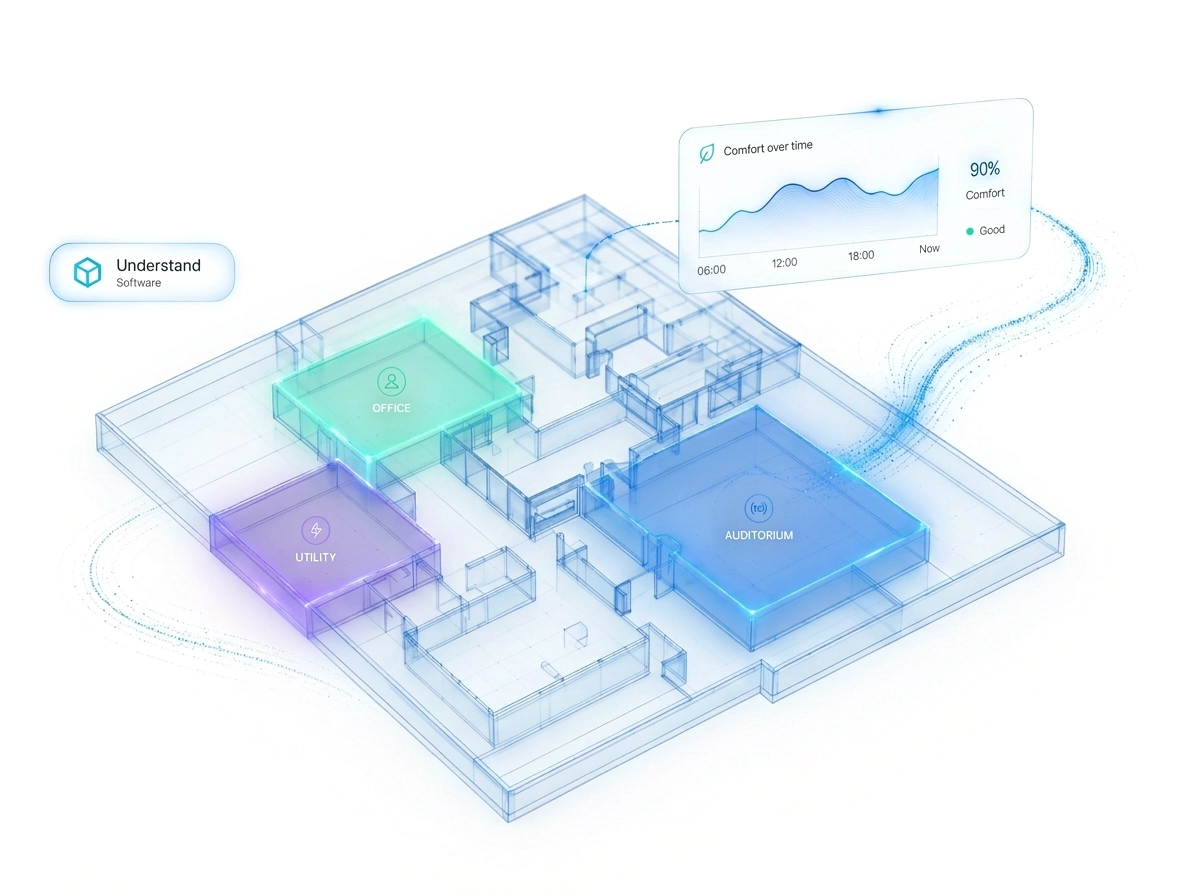
Turns room, zone, and system-level signals into operational understanding, building the signatures that show how the building fills, breathes, heats, cools, and consumes HVAC energy over time.
Turns raw signals into operational intelligence, so the building’s real demand becomes visible.
Turns real demand into intelligent HVAC control through building-specific learning, real-time signals, calibrated signatures, verified outcomes, and near-term demand prediction – 5, 15, 60 minutes and a day ahead.
Converts demand into action, reducing waste and improving HVAC performance in real time.
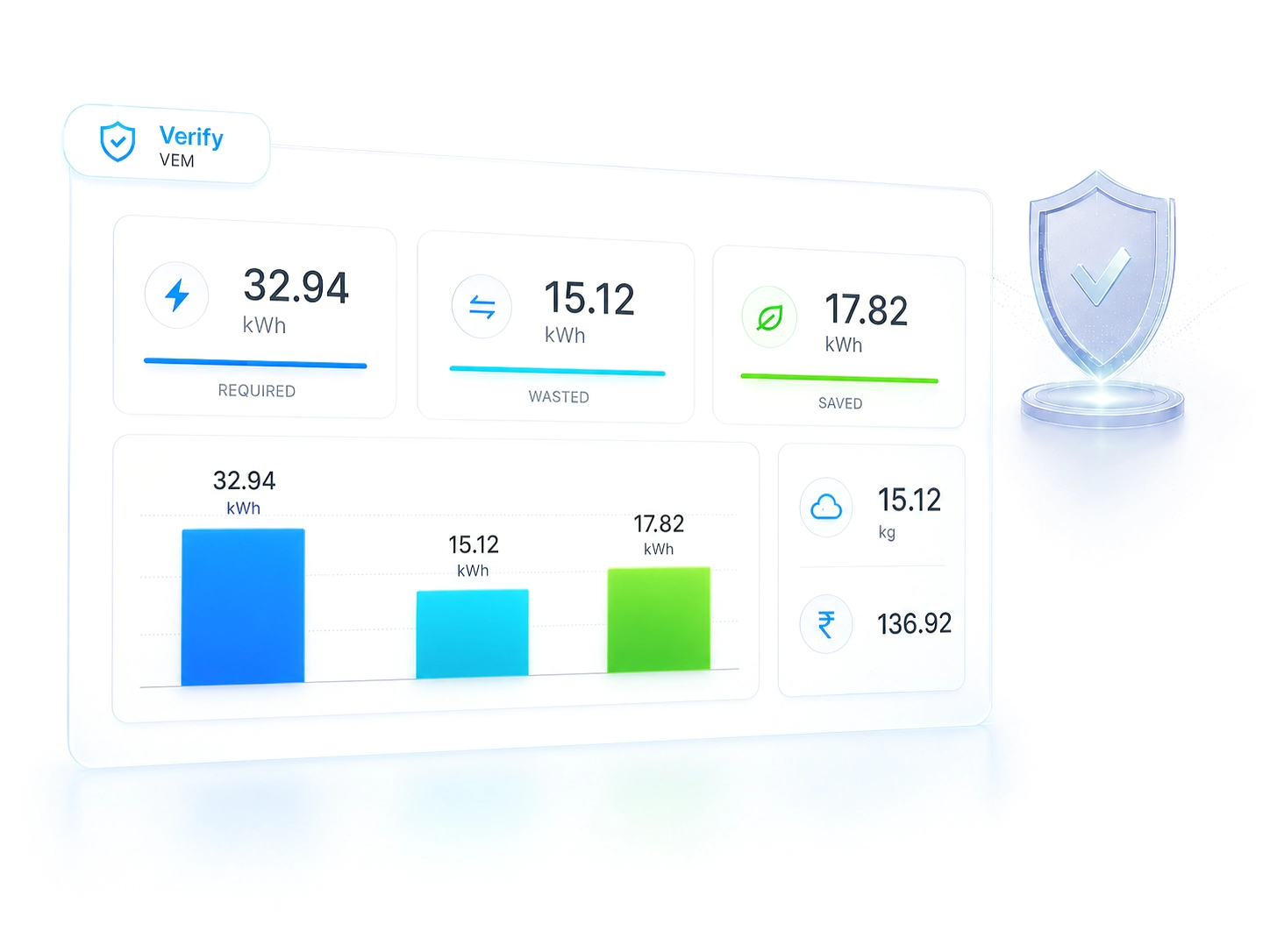
Turns every operational improvement into defensible evidence – showing what energy was required, wasted, or saved in kWh, cost, ROI, MRV, and ESG terms, without requiring physical sub-metering on every individual unit.
Documents the financial and energy value of each improvement and supports carbon reporting.
Most buildings still operate through schedules, habits, and fragmented control logic. ECO·IN Building Intelligence Platform works differently: it follows how the building is actually used, how each zone responds, and when HVAC energy is truly required. That is how real demand becomes active control – and active control becomes verified savings.
The intelligence core of ECO·IN Building Intelligence Platform – transforming raw building data into the operational understanding Sol AI needs for intelligent HVAC control and measurable, defensible results. Each signature captures a different dimension of building behavior: how spaces are used, how zones respond thermally, how air quality changes, and when HVAC energy is truly required.
Learns occupancy-related demand patterns, so HVAC responds to real demand rather than fixed schedules.
Shows how each zone responds to temperature, humidity, load, and HVAC activity over time.
Shows how CO₂, PM2.5, TVOC, humidity, temperature, and ventilation behavior change by room and time.
Shows when, where, and under what demand condition HVAC energy was actually required.
Sol-In HVAC Intelligence is the first application of the ECO·IN loop.
They do not really know where demand is coming from, where waste is happening, or which parts of the building actually need HVAC response.
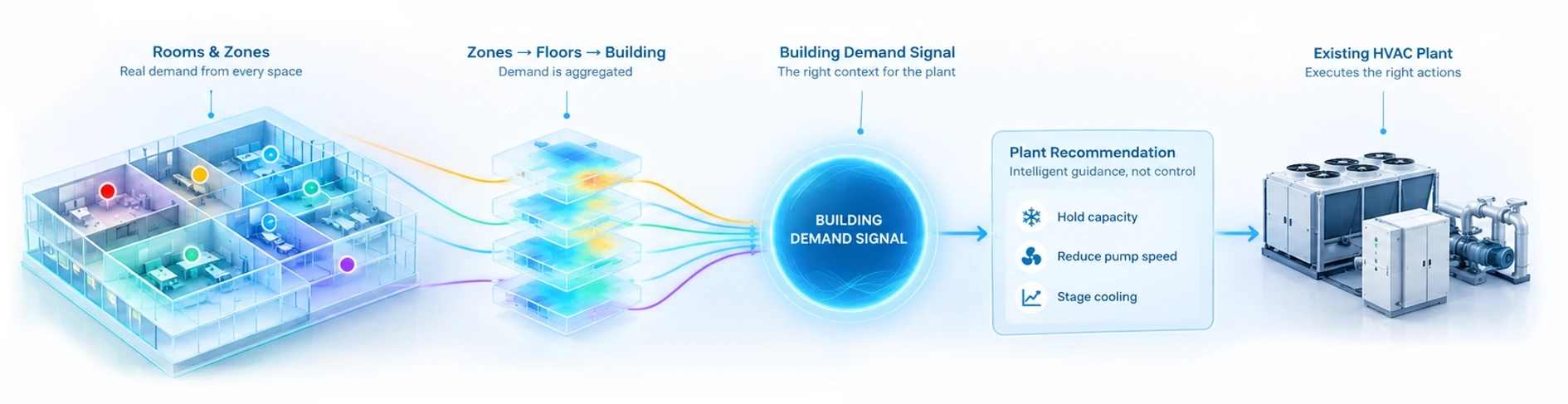
It shows how demand is shifting across rooms, zones, floors, and systems – where more capacity is needed, where less is enough, and where waste is building.
ECO·IN does not replace chiller, VRF, or pump controllers. It provides the demand context they do not have.
BMS knows what is running.
ECO·IN knows if it should be running.
Reports equipment status based on schedules, setpoints, and static operating logic.
Uses Sol AI to interpret real demand through occupancy-related signals, IAQ, thermal behavior, and energy data to drive better HVAC decisions.
Shows alarms, runtime, and operating data – but leaves teams to interpret what it means.
Builds operational understanding through Building Signatures, turning raw signals into demand logic, decision-making, and action.
Can display consumption, but cannot prove whether energy was required, wasted, or saved.
Uses VEM to compare baseline and actual performance in kWh and cost terms, with carbon outputs available for reporting.
Operates the building as configured, even when real conditions change.
Learns how the building actually behaves over time – and follows it.
Independent architecture. No BMS required. Where a BMS exists, ECO·IN operates independently above it.
Real demand, active control, and verified savings are not just platform claims. Sol-In has already demonstrated the loop in real buildings – identifying hidden waste, adapting HVAC operation to actual behavior, and verifying the result through VEM. Explore the case studies and proof materials behind the platform.
Cut through blind spots, fixed schedules, and unverified claims with one connected system built to measure, act, and prove results.
* ECO·IN Building Intelligence Platform currently delivers HVAC Intelligence – the first live vector of the platform. Additional vectors will be added as they are validated in the field.