
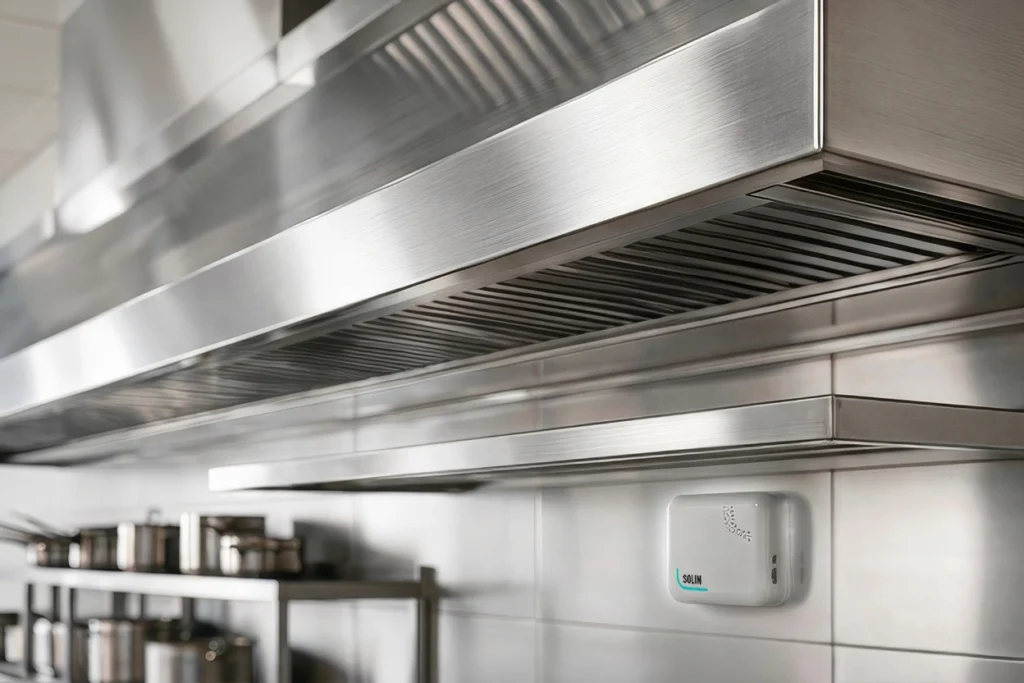
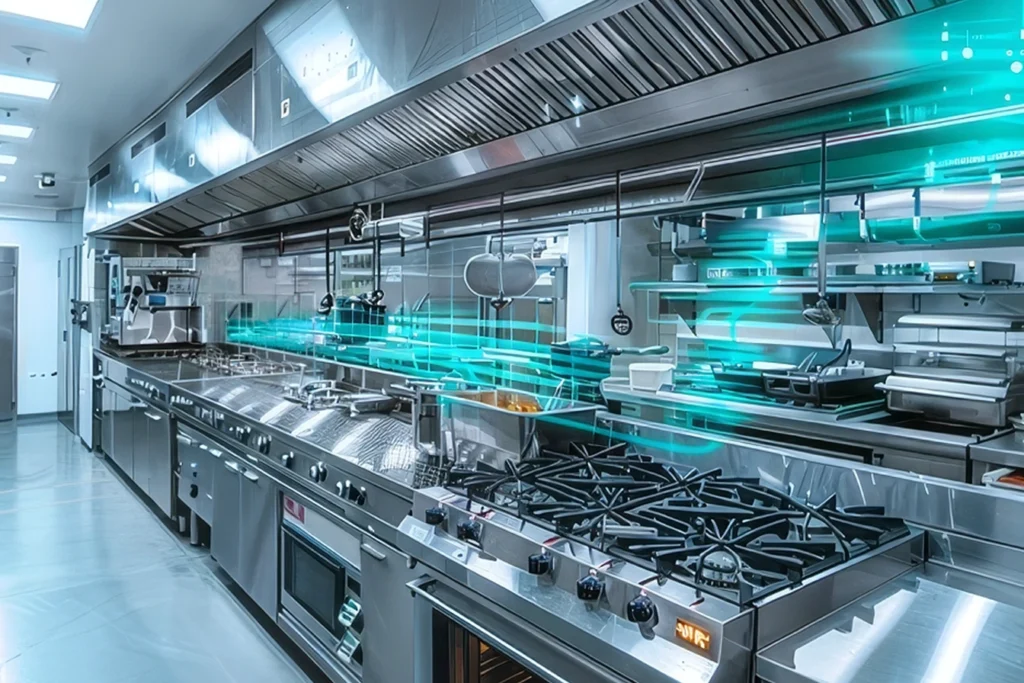





Food service HVAC is built for peak demand, but kitchens do not stay at peak all day. AHUs and FCUs often keep running at full load consistently, creating waste most operators cannot see.
AHUs and FCUs often keep running at full output whether cooking intensity is high or the kitchen is between services. With no real occupancy or demand data, the system keeps operating on worst-case assumptions throughout the day.
Commercial kitchens require large volumes of fresh air, but that air often arrives unconditioned. When hot outdoor air enters the system, it has to be cooled continuously whether the kitchen is busy or quiet u2013 creating avoidable waste.
DCV and DCKV requirements are becoming more common under EN 13779, yet many kitchens still lack compliant control and audit-ready reporting. Carbon estimates remain manual, and verified data is often missing.
Sol-In’s closed-loop engine continuously reads CO₂, temperature, humidity, and occupancy-related demand signals across every zone – kitchen, dining, prep, and corridors. VFD control and smart-coil modulation adjust airflow to real demand within 60 seconds. When activity drops between services, HVAC output drops with it. When service ramps up, the system responds ahead of demand. No cameras. No motion sensors.
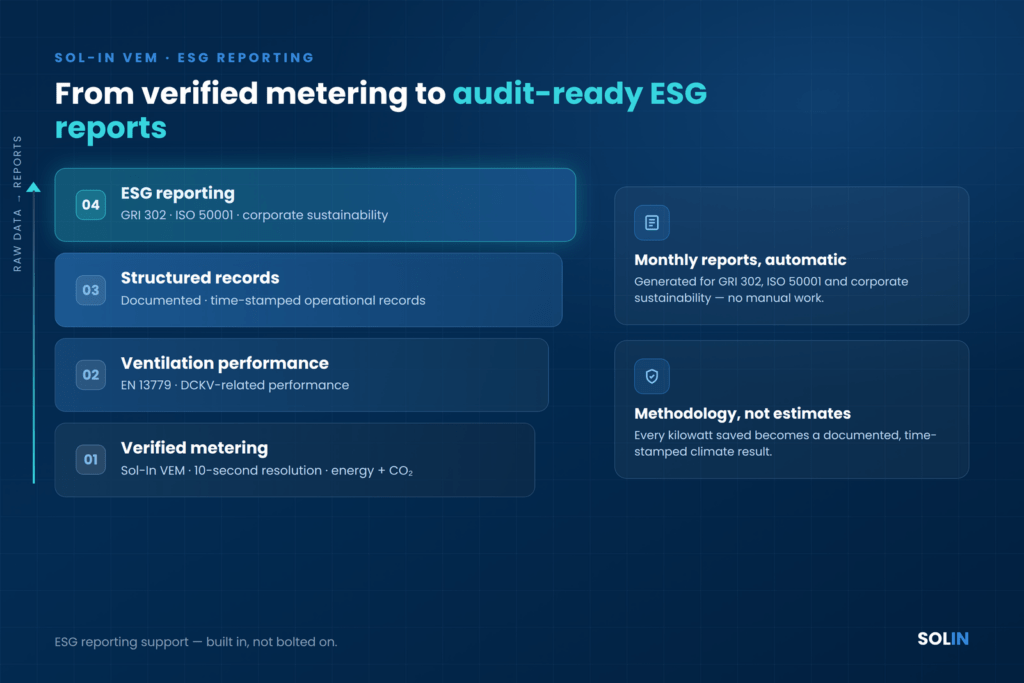
Sol-In’s Virtual Energy Meter produces verified energy savings and CO₂ outputs at 10-second resolution. Monthly reports are generated automatically for GRI 302, ISO 50001, and corporate sustainability reporting, while DCKV-related performance is documented through structured operational records. Every kilowatt saved becomes a documented, time-stamped climate result – backed by methodology, not estimates.
ECO·IN Building Intelligence Platform funds the Phase 1 hardware, helping the project begin with net-positive cash flow from month one. Installation takes 1-3 days around service hours, with no kitchen shutdown. The process then moves through site survey, go-live, controlled pilot, and evaluation – ending with a formal savings report and a structured carbon-impact report. Once one site is proven, the same model can scale across the wider portfolio.
Reduce waste, support compliance, and improve kitchen performance without disrupting operations.